








Planning Commission Recommends Changes to Data Center Zoning as Community Debate Continues
COLUMBIA, Pa. — The Columbia Borough Planning Commission voted Tuesday evening to recommend approval of a zoning amendment that would significantly limit where future data centers can be located within the borough, while public discussion highlighted growing concerns over the impacts of large-scale artificial intelligence facilities.
The July 21 meeting drew residents, council members, and planning officials as the commission reviewed a proposed ordinance forwarded by Borough Council.
Under the proposal, data centers would no longer be permitted in Columbia’s Light Business (LB) zoning district. The amendment would also change data centers from a “by-right” permitted use in Light Industrial (LI) and General Industrial (GI) districts to a conditional use, requiring developers to seek approval through a public hearing before Borough Council.
Planning Commission Chair emphasized that the commission’s role was to review the land use implications of the proposal and make a recommendation to council.
Concerns About Residential Impacts
Planning Commission member Mary Wickenhaiser voiced support for the amendment, citing increased awareness of the potential impacts of modern data centers since the borough’s zoning regulations were originally written.
“I had no concept of the impact of data centers,” Wickenhaiser said, noting that the Light Business district is largely surrounded by residential neighborhoods.
Wickenhaiser said the proposed change would still allow data centers within the borough while ensuring additional public review and oversight through the conditional use process.
She also pointed out that a separate, more comprehensive data center ordinance remains under development and will require review by both the local and Lancaster County planning commissions before any final action can be taken.
The chair agreed that future regulations establishing standards for data centers will be critical.
“The criteria and the standards and the certain things that can help protect residential areas,” he said, including issues such as electricity demand, water usage, and other operational impacts, should be clearly outlined before future projects move forward.
Industry Professional Weighs In
One resident, Todd Altshaus of Chestnut Street, offered a perspective from inside the technology industry.
Altshaus, who said he works in procurement for a managed services company that builds and manages data centers, argued that traditional telecommunications facilities and large AI processing centers are often incorrectly grouped together under the same label.
“When I say my company builds data centers, I mean the traditional sense of a data center,” Altshaus told the commission. “They’re small, they’re unobtrusive, they’re quiet.”
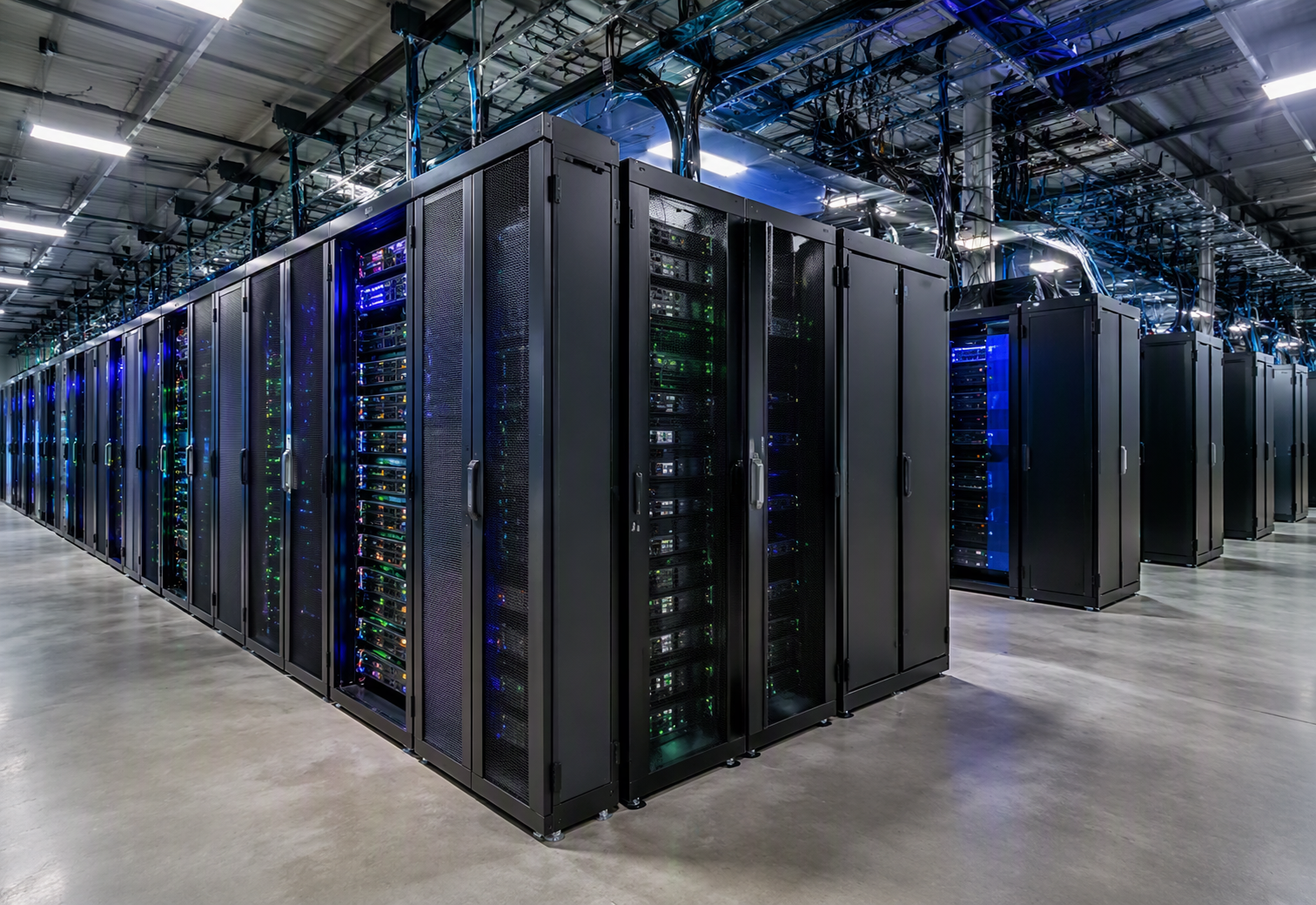
By contrast, he described AI-focused facilities as fundamentally industrial operations that require significant power and cooling infrastructure.
“A large language model processing facility truly is industrial in every sense of the word,” he said.
Altshaus said the borough’s challenge is that existing zoning language does not clearly distinguish between small telecommunications hubs and large AI facilities. Because of that, he argued, local officials should plan for the more intensive use when considering zoning regulations.
Data Center Ordinance Still Being Drafted
Council member Heather Zink told the commission that work continues on a separate data center ordinance that would establish operational standards and requirements for future facilities.
According to Zink, the draft currently spans approximately 17 pages and has incorporated guidance from multiple municipalities, including Penn Township, West Donegal Township, and Pequea Township.
“We do have it done,” Zink said, explaining that several details are still being reviewed, particularly setback requirements and how they would impact potential industrial sites within the borough.
Zink said the borough must ensure that restrictions are substantial enough to protect nearby properties without making development legally impossible.
She also confirmed that the timeline for county planning review means additional action on the data center ordinance will likely extend into the fall.
Residents Seek Stronger Safeguards
Residents continued to raise concerns about the long-term impacts of large-scale AI facilities.
Sharon Litner questioned whether future regulations will include stronger decommissioning requirements if a facility closes or ceases operation.
“My fear is that if someone does put a data center in anywhere in here and something falls through financially or otherwise and they walk away, we’re going to be left with a mess,” Litner said.
Resident Kathy thanked council members who supported advancing the zoning amendment and argued that AI facilities represent a significantly different type of development than traditional data centers.
“This is a monumental thing,” Kathy said. “It would impact the entire community, not just Columbia.”
She urged officials to seek technical expertise as regulations are developed, arguing that communities across the country are still learning how to manage the impacts associated with AI infrastructure.
Opposition Raised Over Existing Zoning Strategy
Not everyone agreed with the proposed amendment.
Eric Kauffman urged commissioners to reject the recommendation and send the matter back to council for further consideration.
Kauffman argued that when the borough previously developed zoning regulations for the McGinnis property, data centers were intentionally placed within the Light Business district because the borough-owned property provided a greater degree of local control.
According to Kauffman, industrial-zoned properties elsewhere in the borough could potentially be acquired by private developers, reducing the borough’s leverage over future projects.
“Columbia does have full authority over McGinnis,” Kauffman said. “That’s why we put it there.”
Looking Ahead
Tuesday’s discussion focused only on where data centers may be located and what approval process would be required.
A separate, more detailed ordinance addressing issues such as setbacks, operational standards, noise, utility usage, and decommissioning requirements is still being finalized and has not yet formally come before the Planning Commission.
With public interest remaining high, both the zoning amendment and the forthcoming data center regulations are expected to remain major topics of discussion in the coming months as Columbia officials determine how AI-related development will fit into the borough’s future growth plans.