
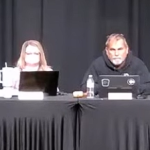




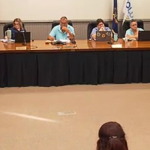



COLUMBIA, PA – For nearly two and a half hours Thursday night, Columbia Borough residents, council members, planners, and the attorney wrestled with one of the biggest development questions facing the community: how should Columbia regulate data centers before one potentially arrives?
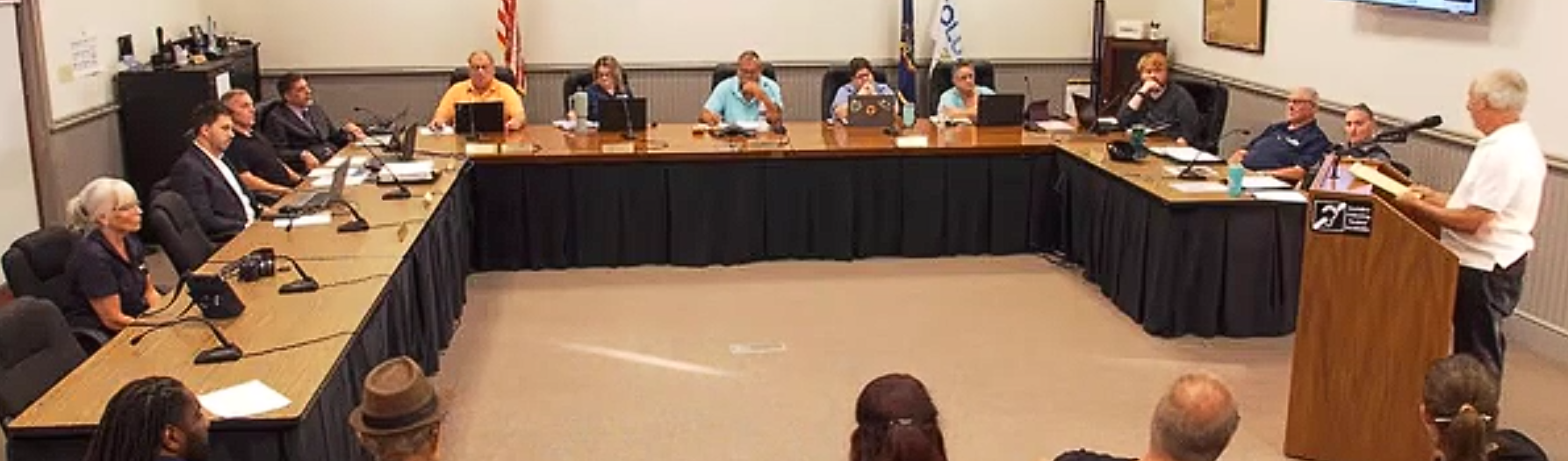
The special meeting, held Sept. 24 at the Columbia High School campus, was not about approving a data center. Instead, officials worked through a draft zoning ordinance line by line, examining everything from building setbacks and height restrictions to water use, noise levels, emergency response planning, and environmental protections.
And while the topic was highly technical, the atmosphere was anything but boring.
At various points microphones startled speakers, council members joked about chairs getting tangled, someone’s stomach became an unexpected star of the evening, and football fans anxiously watched the clock as the meeting stretched toward its scheduled ending time.
One thing was clear throughout the night: residents came prepared.
A Community Doing Its Homework
Dozens of residents spoke during the meeting, many arriving with research from other municipalities, model ordinances, planning commissions, environmental organizations, and universities.
Several speakers urged council to adopt stronger regulations than those currently proposed. Concerns centered around:
- Noise pollution from cooling systems
- Water consumption and discharge
- Groundwater protection
- Heat generation and thermal impacts
- Building heights
- Emergency response planning
- Power infrastructure
- Future expansion possibilities
Residents repeatedly emphasized that while technology evolves quickly, Columbia’s protections need to be strong enough to safeguard neighborhoods for decades to come.
Why Columbia Must Address Data Centers
One of the most important discussions of the evening centered around a point many residents were still trying to understand.
Officials explained that Pennsylvania’s Municipalities Planning Code requires municipalities to allow legitimate land uses somewhere within their zoning framework. In other words, Columbia cannot simply prohibit data centers outright.
Instead, the Borough’s challenge is determining:
- Where data centers could be located
- What restrictions would apply
- How to protect residents without creating what attorneys call “exclusionary zoning”
The balancing act became one of the meeting’s recurring themes. Residents often pushed for stricter standards, while borough officials and legal counsel repeatedly cautioned that regulations must remain legally defensible.
Height Restrictions Move Lower
One of the biggest areas of consensus came when discussion turned to building height. The draft ordinance had originally contemplated heights up to 100 feet, a figure that many noted was developed when planners were focused on the former McGinness property.
Multiple residents argued that 100-foot structures would dramatically alter Columbia’s landscape and potentially increase noise concerns from rooftop equipment.
After discussion, council members indicated support for reducing the proposed height limit to 50 feet.
The proposal earned one of the night’s few moments of visible public approval, prompting officials to gently remind attendees that applause wasn’t necessary.
Setbacks Remain a Major Question
Another lengthy discussion focused on how far data center buildings should be separated from neighboring properties.
Residents proposed setbacks ranging from 200 to 350 feet, while others suggested percentage-based formulas tied to parcel size. Several speakers argued that larger setbacks would help protect residents from noise, visual impacts, and future expansion.
Officials, however, cautioned that overly aggressive setbacks could unintentionally make development impossible and potentially expose the borough to legal challenges.
No final decision was made, but council agreed additional review of zoning maps and potential development parcels would be needed before settling on a number.
Water and Environmental Concerns Dominate Discussion
Few topics drew as much concern as water.
Residents questioned how data centers would obtain water, how cooling systems would operate, what would happen during drought conditions, and whether discharge could impact the Susquehanna River.
Council members expressed support for requiring closed-loop cooling systems, which recycle water rather than constantly drawing fresh supplies. The draft language was strengthened during discussion from developers being “encouraged” to use such systems to being “required” to do so.
Environmental concerns extended beyond water.
One resident highlighted thermal pollution and urban heat island effects, describing how large facilities and associated infrastructure can increase temperatures in surrounding areas. Others pushed for thermal impact studies and mitigation plans to become part of any future application process.
Noise May Receive More Attention
Perhaps no issue generated more emotional discussion than noise.
Residents repeatedly cited reports from communities living near data centers, describing constant low-frequency humming from cooling equipment and concerns about sleep disruption and quality of life.
Several speakers urged council to adopt stricter decibel limits and require professional acoustic studies both before and after construction. Suggestions included baseline measurements, predictive modeling, vibration testing, and ongoing monitoring.
Council members were receptive to revisiting portions of the noise section, with some proposed limits likely to be revised before the ordinance advances.
Emergency Planning Emerges as Priority
Fire safety and emergency preparedness also became major topics.
Residents referenced guidance from other municipalities requiring comprehensive emergency response plans prepared by qualified professionals, reviewed by emergency responders, and updated over time.
Several speakers noted that potential data center fires present unique challenges and argued local first responders should receive specialized training before any facility is allowed to operate.
Officials appeared open to consolidating several scattered sections of the ordinance into a stronger, more unified emergency management framework.
No Final Vote Yet
By the time the clock approached 9:30 p.m., council had worked through only part of the ordinance.
Officials announced that another special meeting will be needed to continue the review, beginning with the section on community impact analysis.
If there was one takeaway from Thursday night’s discussion, it was that Columbia residents are paying close attention.
The evening featured disagreements, legal questions, and plenty of technical jargon. But it also showcased something uniquely Columbia: a room full of neighbors willing to spend more than two hours debating setbacks, decibel levels, and cooling systems because they believe the future of their town is worth the effort.
And yes, by the end of the night, somebody finally got to go home and watch football!


Watched the livestream meeting was very orderly and a lot of good points brought up