




The Columbia Chronicle
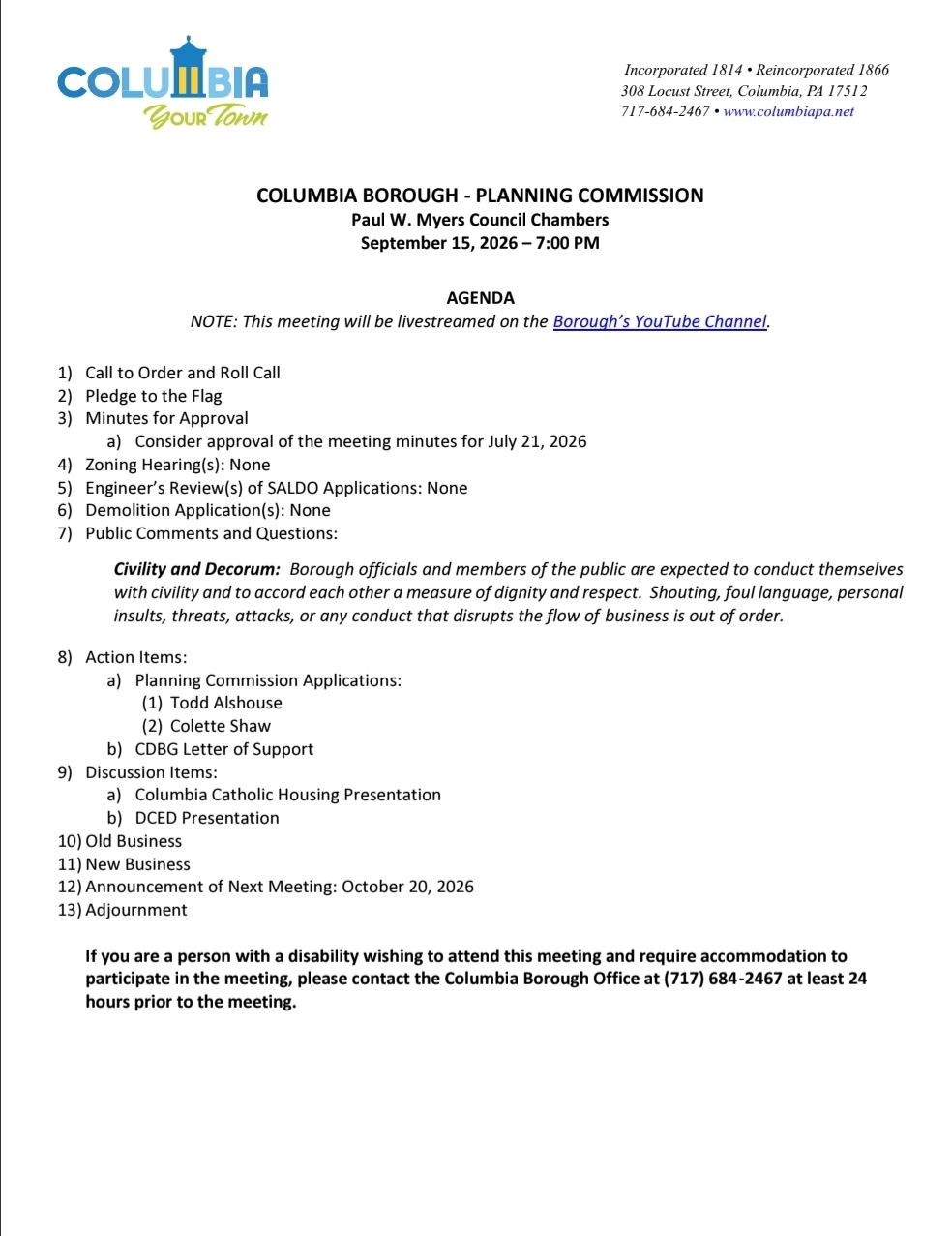
The Columbia Borough Planning Commission held a productive September meeting that focused on three major topics with long-term implications for the community: expanding affordable senior housing, pursuing major improvements at Columbia Crossing, and advancing a comprehensive review of the borough’s zoning ordinance. The commission also recommended two new residents for planning commission service, helping strengthen citizen involvement in local government.
New Planning Commission Members Recommended
One of the evening’s first actions involved filling vacancies on the Planning Commission. Two residents submitted applications and spoke about their interest in serving the borough.
Both applicants emphasized their commitment to thoughtful growth, community involvement, and preserving Columbia’s character while supporting future development. Commissioners praised both candidates for their enthusiasm and willingness to contribute.
Following discussion, the commission unanimously recommended one applicant for appointment to the commission’s vacant full membership seat and the other for an alternate position. The recommendations now move to Borough Council for final approval.
Columbia Crossing Project Receives Strong Support
A significant portion of the meeting centered on Columbia Crossing and plans to address structural concerns while enhancing the facility’s usability.
Borough officials explained that the building’s exterior glue-laminated wooden beams and columns have experienced deterioration due to moisture-related issues. Although the structure remains safe and operational, officials noted that repairs cannot be delayed indefinitely.
Rather than simply repairing the damaged components, borough staff have taken a broader look at the facility’s future. One of the most exciting concepts involves replacing the wall separating indoor and outdoor spaces with large opening doors that would allow the facility to function as a more unified event venue.
Officials said the change could dramatically improve educational programming, community events, and group gatherings by allowing large groups to use both indoor and outdoor spaces seamlessly. Currently, the separation between spaces limits event capacity and restricts programming opportunities.
Additional improvements under consideration include:
- Replacing deteriorated exterior beams and columns.
- Removing problematic stone veneer that traps moisture.
- Improving accessibility around outdoor gathering areas.
- Enhancing sightlines and openness throughout the facility.
- Expanding opportunities for educational and community programming.
Grant Funding Progress
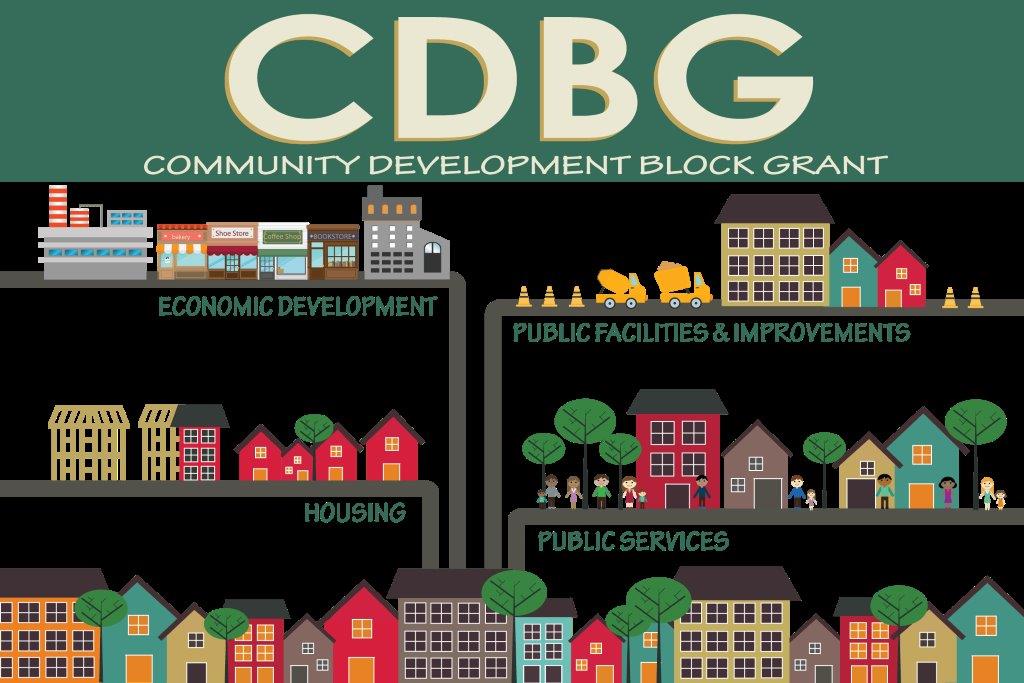
The borough is seeking a $250,000 Community Development Block Grant (CDBG) to help fund the project.
Officials announced encouraging news during the meeting: the project was awarded a $300,000 state Local Share Account grant earlier that day. Combined with the requested federal funding, the borough could secure more than $550,000 toward the improvements.
Planning commission members unanimously approved a letter supporting the CDBG application.
If funding proceeds as expected, borough officials hope to begin construction in spring 2027.
Ambitious Senior Housing Expansion Proposed
Perhaps the most substantial presentation of the night focused on the future of affordable senior housing in Columbia.
Representatives from the organization that owns and operates Trinity House Apartments and St. Peter Apartments outlined a conceptual plan for a third affordable senior housing development.
The organization, which has been providing senior housing in Columbia since the 1970s, cited growing demand as the driving force behind the proposal. Current waiting lists illustrate the need:
- St. Peter Apartments has 126 residences and 178 people on its waiting list.
- Trinity House has 133 residences and 197 people on its waiting list.
- Together, the two facilities have 375 individuals waiting for housing.
- Nearly 100 of those applicants are Columbia residents.
Representatives also pointed to demographic trends showing a rapidly growing senior population nationally and regionally, arguing that demand for affordable senior housing will continue increasing over the next decade.
The Concept
The proposal focuses on property already owned by the housing organization in the area surrounding Trinity House.
The concept includes:
- Construction of a new multi-story senior housing building.
- Additional parking facilities.
- Preservation of existing wooded areas where possible.
- New pedestrian amenities.
- Potential bridge connections over Shawnee Run.
- Outdoor gathering areas overlooking the stream corridor.
The development would target seniors with limited incomes, similar to existing housing programs already operating in Columbia.
Presenters emphasized that no consultants have yet been hired and that the project remains in its conceptual stage. Future work will involve engineering studies, site planning, zoning reviews, and financing analysis before any formal approvals are sought.
Community Benefits Highlighted
Supporters argued the project aligns with goals established in Columbia’s comprehensive plan by increasing affordable housing opportunities within the borough.
Additional benefits cited included:
- Providing more affordable housing options for aging residents.
- Meeting documented housing demand.
- Encouraging residents to remain in Columbia as they age.
- Maintaining existing taxable properties.
- Creating new investment in the community.
- Enhancing streetscapes and public spaces.
Commission members generally expressed support for the concept and encouraged continued development of formal plans
Several members suggested examining ways to improve resident convenience, including additional parking options and private balconies that would allow seniors easier access to fresh air and outdoor views.
Borough Zoning Overhaul Moves Forward
The final major topic involved an ongoing zoning modernization effort being conducted in partnership with planning consultants.
The review aims to simplify Columbia’s zoning regulations while preserving the borough’s historic character and neighborhood identity. Consultants reported that Columbia currently contains 17 separate zoning districts, many with overlapping regulations and requirements.
After months of analysis, three potential paths forward were presented:
Option One: Limited Consolidation
This approach would combine only the most obvious overlapping zoning districts and make relatively minor changes.
Option Two: Hybrid Simplification
Under this model, the borough would reduce the number of districts from 17 to approximately 10 while relying more heavily on development form, scale, and neighborhood context.
Option Three: Broad Transformation
The most ambitious option would reduce districts to approximately eight broad categories and move heavily toward form-based planning principles.
Strong Support for a Middle Ground
Planning commission members generally favored a version of Option Two.
Members agreed that the current ordinance is overly complex and difficult for residents, investors, developers, staff, and volunteers to navigate. At the same time, several commissioners expressed concerns that the most aggressive restructuring proposal could be politically and administratively challenging to implement immediately.
Discussion focused on creating a simpler system that would:
- Reduce the number of zoning districts.
- Better reflect how neighborhoods function today.
- Preserve historic character.
- Improve predictability for property owners.
- Modernize regulations to address future growth and redevelopment.
Consultants will now incorporate the commission’s feedback into a draft report that will eventually be presented to Borough Council for further consideration.
Looking Ahead
The meeting highlighted a common theme across multiple discussions: planning for Columbia’s future while preserving the community’s historic identity.
Whether through improvements at Columbia Crossing, expanding affordable senior housing opportunities, or modernizing zoning regulations, commissioners repeatedly emphasized the importance of creating policies and projects that will benefit residents for decades to come.
The borough’s next major zoning discussion is expected to continue later this month, while planning for both the Columbia Crossing improvements and the proposed senior housing development will move into more detailed phases in the months ahead.