







COLUMBIA, Pa. — What began as an ordinary summer afternoon quickly transformed into one of the most destructive weather events many longtime Columbia residents have ever witnessed.
Shortly after 4 p.m. Thursday, dark clouds rolled over the Susquehanna River Valley as a powerful storm swept into the area. Fierce winds tore apart buildings, toppled trees, scattered debris across streets, and left large portions of the community without power.
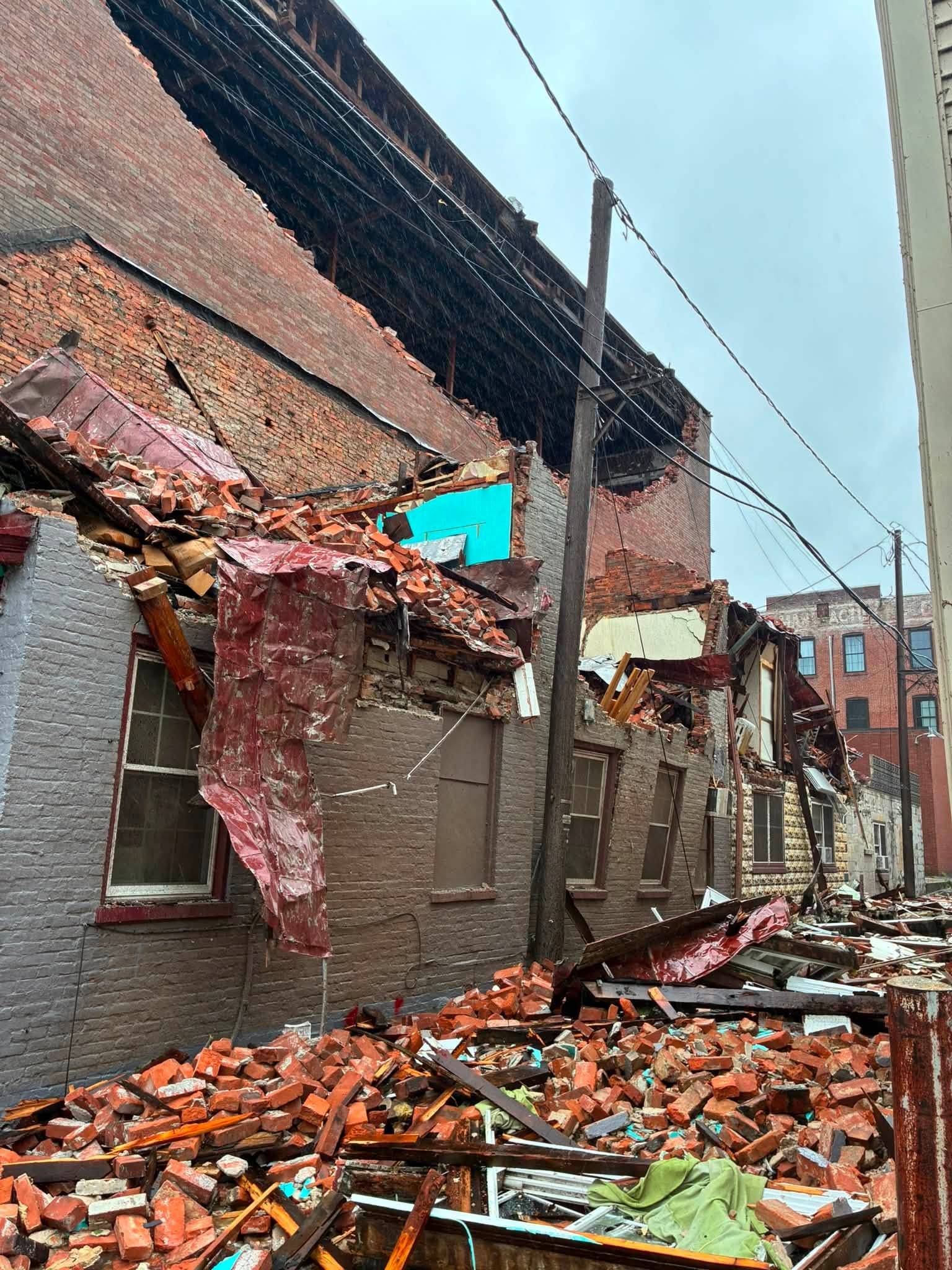
In the heart of Columbia, the storm left a trail of devastation. Part of a historic downtown building collapsed, sending bricks and debris crashing onto a neighboring business. Emergency crews rushed to the scene as stunned residents gathered nearby, struggling to comprehend the damage that had unfolded in a matter of minutes.
Mayor Leo Lutz described the destruction as unlike anything he had seen during his years in the borough.
“I’ve never seen anything this devastating.”
Across town, trees lay uprooted, power lines dangled dangerously over roadways, and emergency vehicles filled the streets. Reports indicated multiple structures suffered significant damage, while residents faced downed wires and blocked roads throughout the borough.
Remarkably, despite the serious structural damage, emergency responders moved quickly to protect lives and assist those affected. Firefighters, police officers, EMS personnel, and utility crews worked side by side as they assessed the destruction and secured hazardous areas.
As the scale of the disaster became clear, Columbia Borough officials declared a State of Emergency and later imposed a nighttime curfew to protect residents and aid cleanup operations. An emergency shelter was opened for those displaced or in need of assistance.
The storm’s impact stretched throughout the river region, damaging homes, businesses, and public buildings. Residents watched helplessly as powerful winds tore through neighborhoods, leaving a scene that resembled the aftermath of a tornado.
As darkness fell, crews continued clearing debris while utility workers worked tirelessly to restore electricity. The sounds of chainsaws, sirens, and heavy equipment replaced the usual evening calm of the riverside community.
Yet amid the destruction, the spirit of Columbia remained evident. Neighbors checked on one another, volunteers stepped forward to help, and local organizations opened their doors to those in need. Strangers became helping hands as residents began the first difficult steps toward recovery.
For many, the storm will be remembered not only for the damage it caused, but also for the resilience it revealed. While buildings can be rebuilt and streets can be cleared, the strength of a community comes from the people who refuse to give up.
Today, Columbia faces a long road ahead. There will be cleanup, repairs, and countless hours of work before life returns to normal. But if the response from residents is any indication, the borough will meet that challenge the same way it always has: together.
The storm may have left scars across the town, but it did not break Columbia’s spirit. As the community begins to rebuild, one thing remains certain: Columbia is stronger than the storm.



did anything happen on concordia road in columbia they lose power any trees down any flooding